Thursday, January 13, 2011

Maximizing Your Performance On The Water


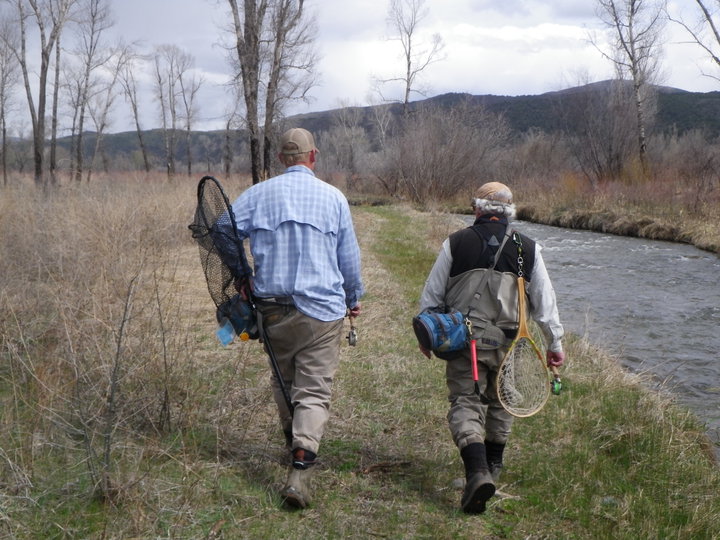
There’s no doubt that there is a lot of hoopla written and talked about in the way of high performance gear for fly anglers. Think of all those ads in magazines, or all the discussions on blog and internet forums. It’s overwhelming and everyone has their favorites. Every company touts having the best waders, rods, reels, fly lines and more. I’ve often found that my biggest key to performing on the water is my body’s comfort level. If I can stay comfortable in a variety of weather conditions my brain has a tendency to keep focus on the job at hand: catching fish. I’m infamous in my circle of fishing friends for being able to stay out there in the elements and fishing hard when other give up and call it quits. In cold weather, while others are complaining about frozen hands, frozen feet and going back to the truck to warm up in front of the heater, I’m still out there. Cold spring and summer rains, no problem. Baking in the heat, no worries. Extreme wind, doesn’t faze me. Am I Superman? Far from. I simply dress right.

Cold Weather

Last March I took off to Alcova, Wyoming to go fish Grey’s Reef and the Miracle Mile sections of the North Platte River for five days. We’re still young enough, and more importantly, broke enough to make our excursion a camping trip. No hotels, hot showers, or beers while watching tv in the comfort of warmth. The weather was brutal and we all knew it was going to be a long trip for all of us, but what the hell, we’re going fishing and nothing was stopping us. If any of you have ever been to this part of Wyoming you know this area is desolate. Trees are few and far between so we packed a half cord of wood in the boat trailer thinking we’d at least be warm and toasty at night. Wrong. The wind was ripping so much that our burned through our wood in only two days. Wind is a common issue here, and if it’s not blowing hard you count your blessings. Day One, two and three were God awful. Highs in the single digits to low teens, overnight lows below zero and wind gusts topping 50 mph. I’m not kidding. It was brutal. If I ever die and go to Hell, I imagine it’d be like winter in Alcova, Wyoming. Tents collapsed despite the guylines being well staked with coolers, boats and trailers used as wind blocks. It snowed every day and got old very quickly waking up in the morning to 18” inches of fresh snow, brutal winds and subzero windchills. No matter, we caught fish. Actually we landed several large fish pushing 20-24” inches daily. On our fourth day we did have comparatively nice weather where the mercury sky rocketed into the thirties with no wind. What a relief. We knew it was too good to be true and our last day ended up being identical to the first three days. Everyone got cold, except for me. How is that possible? I’m not going to go into all the ins and outs of the layering concept as this is now common knowledge in the outdoor industry. Essentially though, dressing in multiple layers allows you to add or subtract articles of clothing to maintain your comfort level and regulate your body’s temperature. You’ll notice I’m very fond of Patagonia clothing. Patagonia started the layering concept and designed the first technical pieces of fleece a long time ago and has remained at the forefront of clothing for outdoor athletes and enthusiasts ever since. I've got to give some props to my man Casey Sheahan, a dear friend and CEO of Patagonia (who happens to live locally) who brought me on board with the merits of their wonderful clothing.  Simms, a long time leader in the fly fishing industry has also become increasingly popular with winter anglers due to their big push into cold weather clothing. Their Waderwick, RiverTek, and Guide series of clothing are all very nice as well.


My list of cold weather layers and clothing is below.

Base layers – Patagonia Capilene 3 top and bottom, Simms Polypropylene Liner Socks

Mid Layers – Patagonia R1 top and bottom, Patagonia Micro Puff Vest, Patagonia Micro Puff Hooded Jacket, Patagonia Ultra Heavyweight Mountaineering Socks

Outer Layers – Patagonia Guidewater Jacket, Simms G4 Pro Stockingfoot Waders

Hands/Neck – Glacier Glove Sun Gloves under Simms Windstopper Foldover Fleece Mittens, Patagonia Fleece Balaclava, Simms Windstopper Fleece Beanie

This is an excerpt from our annual newsletter, Fly On The Wall.  Written by Kirk Webb

Saturday, January 8, 2011

Guess Who's Back? Back again.


Yeah, I know, I know. Our blog hasn't been updated in seemingly forever. Don't be discouraged. We're back now. Look forward to many new and exciting articles on here again. After so many requests to bring our blog back, well, we're back. And we're going to hit it full force. Stay tuned..... Kirk Webb and the staff at Taylor Creek Fly Shop.

Thursday, May 27, 2010

The Monster Bows of Memorial Day

Fresh outta college and bumming around his homewaters, Woody stuck this behemoth Frying Pan River Rainbow on 5-27-10.


The Frying Pan River and it's world famous rainbow trout that grow to epically large proportions, are being seen and hooked in solid numbers. For the past three days now at least one massive rainbow has been landed daily along the upper river near the dam at Ruedi Reservoir. This includes two, 29" inch fish and one, 28" inch fish. Your shot at landing that "fish-of-a-lifetime" is now! This never lasts long and the timing and weather are perfect. Props to Jason, Kristen, and Woody for their stellar catches. Feels like the days-of-old on the Frying Pan anymore....we're lovin' it! For the past few years now, record setting snow packs have been making this holiday weekend more challenging for anglers as water flows of 250-500 plus cfs were common.


After a normal snow pack this past winter (09'-10'), water flows are expected to remain near 110 - 150cfs nearly through the month of June. These lower flows make fish wary, especially the big boys and girls. Sight fishing is critical to being successful up here; a keen eye will definitely give you significantly more shots at fish. Light fluorocarbon tippets of 6x and 7x are always recommended. Look for fish to key in on midges early in the day, while midday offers up the best baetis fishing. Attractor patterns like mysis shrimp and eggs are also fishing well.


Hot flies: TC Hippie Mysis 16-18, TC South-of-the-Border Mysis 16-18, BTS Mysis, TC Flashtail Mini Eggs 14-18, Pandemic Baetis 20-22, TC Black Poxyback Baetis 20-22, TC S.T.D. Baetis 18-20, Barr Emerger BWO 20-22, TC Boogers 18-20, Flag Dun Black/Olive 20-22, Roy-Boy's 18-20, HOH Spent Midge 22, TC Bills Midge 20-24, P-Tails 18-22, RS-2's 20-22.


-Poke your head in the shop and we'll get you dialed in on the best flies. Remember, TC Fly Shop has more custom/local flies for the Frying Pan and the Roaring Fork Valley than all other fly shops combined. Our staff of contract fly tiers have originated many of your favorite patterns and continue to push the envelope with new, trick flies yearly. Stop by the shop and find your new and old favorite fly patterns!


When you stick that pig, remember to fully revive the fish the fish prior to releasing it. That same fish has probably been caught by anglers before you and hopefully after you.

To our troops and vets, we thank you for your service. It's because of you that we can earn a living as fly-fishers. Kirk Webb and the crew at Taylor Creek.

Wednesday, May 5, 2010

"I Can't See Outta My Windshield!"


Top photo courtesy of Sean Hudson, others courtesy of Kirk Webb

The annual Mothers Day Caddis hatch is here! Currently, this massive wave of bugs are being seen from Rifle all the up to El Jebel. Water visibility is superb on the Roaring Fork (even below the Crystal River) with the Colorado River having about 18" inches to 30" inches of viz just depending on the day. Even if the rivers have 6" inches of visibility the fish won't have any trouble looking up to eat your dry simply due to the huge masses of insects hatching.

The Goods-

Look for the hatch to begin around 11:30 to noon and last till 3 or 4pm. After mating, egg laying caddis return to the river in the last hour of light which provides equally exciting dry fly fishing opportunities. The best hatches will take place on the hottest days. Timing these heat waves can be a bit tough. If it's too hot for a long string of days the river (especially below the confluence of the Crystal River) has the potential to blow out and become too muddy to be fishable. When this happens the river above the Crystal can have as much as two feet or more of water visibility than the lower river. The current weather forecast looks ideal for this next week...-fyi-....cool overnight temps and warm daily highs.

The Rigs-

Tandem dry fly rigs consisting of Stimi's and Pearl&Elk Caddis fished on 4x tippets. You'll catch fish dead drifting but you'll do more damage out there by skittering or skating your flies. I prefer to call our technique more of a "bumping" or "soft-skate" technique. Bring plenty of floatant....you'll need it. We're big on double dosing our flies and treating them with Silicone Mucilin followed by a dose of Dry Shake or Frogs Fanny.

When nymphing prior to the hatch or during late afternoons look to Cat Poops or other stonefly nymphs fished as your lead/point fly trailed by various #16-18 Caddis Pupa patterns like Yuba Pupas, Deep 6 Caddis or Z-Wings. Smaller attractor patterns such as Princes, 20Inchers, and San Juan Worms are fishing well also.

Obviously dry/dropper techniques will fish well too especially during the front end of the days hatch. Soft hackle patterns like a Soft Hackle PT or a Soft Hackle Peacock are often killer dropper flies.

The Current Caddis Hot Spots-

Glenwood Springs - There's more caddis here than anywhere. That can be good and can be bad. If there's too many caddis the fishing can be a bit tough...aka the fish are just downright full and there's too many bugs. Hit up Two Rivers Park, Big Johns and the New Castle Bridge on the Colorado. On the Fork be sure to try 7th St Bridge, Veltus Park, Sunlight Bridge and 3 Mile Creek.

Bonedale'- Hit the Bury Lease, Sutank, Bonedale Boat Ramp, and Catherine's Store. Lighter numbers of caddis are up here though that can work to your advantage as we've already discussed.

Saturday, May 1, 2010

Recent Pictures


Next Gen G.Loomis Rods


I know I've been waiting a long, long time for this to happen. I can only imagine what is going to come from the best rod designer and champion fly caster in the industry. Will G.Loomis again dominate the sport like they did with their last graphite introduction, the GLX? To think that it's been 17 years since that's happened! GLX was literally light years ahead of its time and is still trying to be copied by all premium rod manufacturers. Can't wait to try one of these when they're finally unveiled..........

Stoneflies in the Mud

STONEFLIES CAN BE DEADLY DURING "MUD SEASON"

Though many waters in the Roaring Fork Valley remain clear during May, most other waters in the Rockies during May and June are high and muddy due to spring runoff. Most people turn to tailwater and stillwater fisheries during this time of year despite the fact that fish do feed in stained and discolored water situations. Many flies and techniques can be employed in muddy waters that help the fish find the fly. First and foremost, one must understand that the bulk of the fishing we do in high water situations is nymph and streamer fishing. Fish typically will be hunkered down on the stream bottom and up against the banks. Heavier rods in the 5-6 weight categories are required since we typically will be throwing big flies with ample weight that will drive the flies down to the bottom. Because of the stained water and larger flies, heavier leaders and tippets are also used. One can often get by fishing 2X, 3X and even heavier tippets.

Large stonefly nymphs are most active during runoff including the Pteronarcys or Salmonfly. This massive (2-3.5 inch) stonefly often becomes dislodged in the faster turbulent waters and become an easy, large meal for Mr. Trout. The peak hatch times for the Salmonfly also coincide with spring runoff. This is a hard hatch to time right (average durations last up to 2 weeks) though many an angler will tell you fond memories of the "Salmonfly hatch in 72" or what have you. An insect of this size makes even the stubborn large trout feed voraciously. Big nymph patterns in sizes 4-8 like Kaufmann's Stone, Wooly Buggers, Poxyback Stones, and Molting Stones will fish well. Fishing with two fly rigs and a healthy amount of split shot will be required. If adult Salmonflies are being seen big Orange Stimulators, Triple Deckers, and King Kongs should be used. Salmonflies are clumsy fliers, and often land on the water with a noticeable splash. When casting these big dry flies be sure to "slap" your flies on the waters surface. Fish take instant notice of all this commotion and typically react with an aggressive take. Several sub-species of stoneflies are common on most waters, from large Golden Stones to smaller Brown Stones. Due to the visibility of the water encountered the larger stoneflies prove to be better fish catches. The Colorado River in Glenwood Canyon and upriver below Gore Canyon provide good hatches of Salmonflies.


Other than the Salmonflies, big streamers also fish nicely. Look for patterns that have big profile heads made of spun hair or wool. These materials "push" and move large amounts of water when being stripped. Fish sense that moving water through their lateral line. A lateral line is the fishes super sensitive set of nerves that enables the fish to find your fly in muddy water and even at night. Another factor to keep in mind is fly color. Most people are under the impression that bright flies show up best in these conditions while just the opposite is true. Blacks, browns, purples, and dark olives are best. This dark color provides a better contrast against the stained color of the water.


One other option for you to try is finding clear flowing tributaries that are running into the main river being fished. Fish will often congregate in the seam of the clear and muddy waters. A perfect example of this is the Frying Pan flowing into the Roaring Fork, or the many tributaries that flow into the Colorado. The fish can obviously see and eat insects in the clear water while the muddy water provides the fish with protection from other predators. Try some of these flies and techniques next time you encounter muddy water, especially during the spring. The results will surprise you. Remember, the fish must continue to eat despite what the water clarity looks like.

Kirk Webb
Taylor Creek Fly Shop